

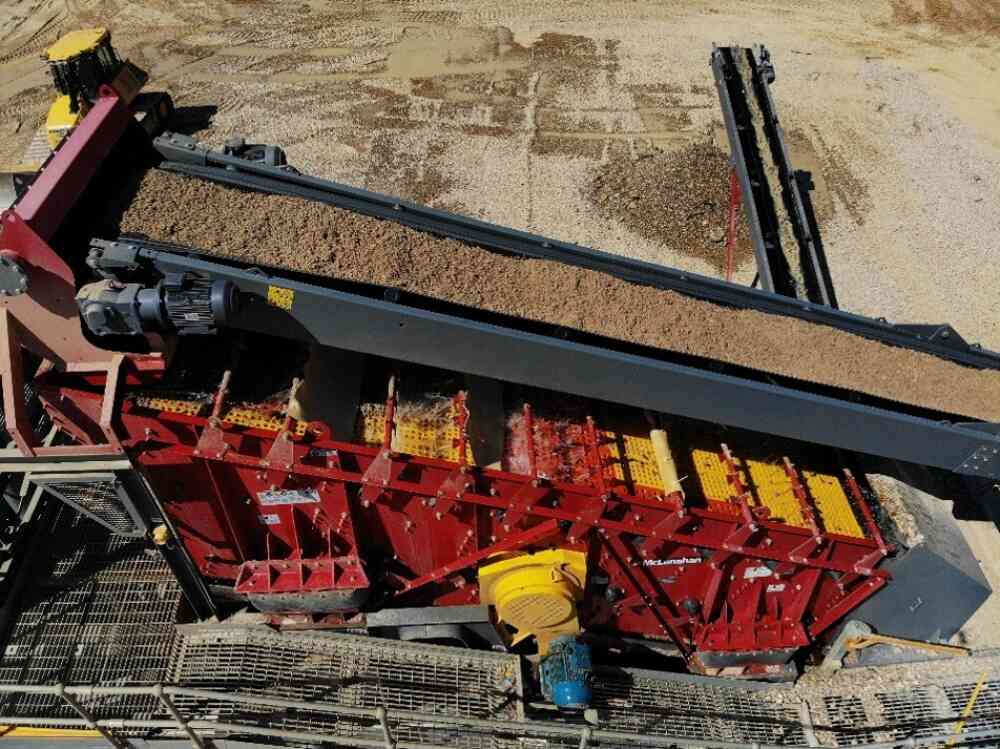
In today鈥檚 evolving aggregates market, screening efficiency and performance are under increasing pressure. Producers are being asked to process more material within the same footprint, largely driven by demand for smaller aggregate sizes.
Historically, the market required a more balanced range of products, with a stronger emphasis on larger base materials of 1 录" (31.75 mm) and smaller. Today, demand is heavily concentrated in asphalt and concrete applications, including specialty mixes. At the same time, the concrete industry increasingly requires smaller products, particularly as pumping becomes more common, which favors tighter gradations.
This shift raises an important question: How can producers get more performance out of their existing screening equipment?
The Need for More Screening Surface
Producing smaller aggregate sizes of 1鈥�- 录" (25.4 mm - 6.35 mm) requires significantly more open area on the screen to achieve proper separation. This creates two common challenges:
- Excessive bed depth 鈥� often exceeding acceptable limits, leading to increased wear and carryover of in-spec material
- Screen blinding 鈥� caused by high bed depth combined with moisture, reducing screening efficiency
A key practice is to monitor bed depth closely, ensuring it does not exceed four times the opening size of the screen media. Maintaining proper bed depth helps improve efficiency, reduce wear and limit carryover.
Additionally, crusher settings play a critical role in screening performance. Regular inspections, sometimes multiple times per day in abrasive applications, help ensure consistent product sizing and reduce the burden on downstream screening.
Screen Rotation and Incline
Many operators hesitate to run a screen uphill, but doing so can be an effective way to improve performance.
Running a screen uphill increases material retention time, giving particles more opportunity to orient correctly and pass through the openings. This can:
- Increase throughput
- Reduce carryover of undersized material
- Improve overall screening efficiency
As long as material is not backing up into the crusher feedbox and the screen continues operating effectively, running uphill can be a practical and beneficial adjustment.听
Matching Stroke and Speed to Material Size
Screen performance is heavily influenced by the stroke and speed (RPM) of the machine. These factors determine the g-force applied to the material, which must be appropriate for the size being processed.
Typical operating ranges can vary significantly:
- Up to ~1,000 RPM for fine material at 录" (6.35 mm)
- Around ~600 RPM for larger material up to 6" (152.4 mm)
It is important to routinely verify stroke and speed, particularly when changing product sizes. Working with your equipment manufacturer can help ensure the optimal settings for your specific application.
Choosing the correct screen media is critical to achieving the desired balance between efficiency, durability and throughput. The primary options include:
Wire Cloth
The most widely used screen media, wire cloth offers:
- Maximum open area for high efficiency
- Easy installation and replacement
- Availability in various wire diameters
听
Keep in mind: larger wire diameters reduce open area, which can impact screening performance.
听
Urethane Media
Urethane has grown in popularity over the past 15鈥�20 years, particularly in:
- Wet applications
- Abrasive environments
听
Advantages include longer wear life, but trade-offs should be considered:
- Reduced open area compared to wire cloth
- Potential reduction in tons per hour in fine, dry applications
听
Urethane is best when durability outweighs the need for maximum throughput.
听
Rubber Media
Rubber media is often selected for heavy-duty applications and offers a balance between durability and flexibility. It is particularly effective in:
- Impact-heavy applications with larger material sizes
- Highly abrasive environments
- Applications where noise reduction is a priority
听
Rubber panels are thicker and more resilient than other media types, allowing them to absorb impact and resist wear. This helps extend service life and reduce maintenance frequency.
听
However, there are trade-offs:
- Lower open area compared to wire cloth and some urethane options
- Reduced screening efficiency in fine or high-capacity applications
听
Rubber media is best suited for scalping and primary screening stages where durability and wear resistance are more important than achieving precise separations.
听
Hybrid (Flex-Type) Media
Hybrid or flex media is especially effective in:
- High-moisture conditions
- Fine screening applications
听
Unlike woven media, these panels are designed with flexible elements (often urethane or rubber strips) that help prevent blinding, when material becomes lodged in openings and blocks screening.
In the right conditions, this flexibility can significantly increase production by maintaining open screening area and reducing downtime.
What to Focus On
As aggregate demands shift toward smaller, more precise products, screening performance becomes increasingly critical. Producers can maximize efficiency and get the most out of their existing equipment by focusing on:
- Proper bed depth management
- Consistent crusher settings
- Optimized screen incline
- Correct stroke and speed
- Strategic media selection


